 Business License

A Complete Guide to Modern Hardboard Production Line & Its Core Advantages
Hardboard, also known as high-density fiberboard, is a versatile, durable wood-based material widely used in furniture manufacturing, construction, packaging, and interior decoration. Unlike ordinary wood panels, hardboard features high density, excellent flexibility, uniform texture, and strong impact resistance. All these superior properties rely on standardized, automated hardboard production lines. Modern production lines integrate raw material processing, fiber refining, molding, hot pressing, and finishing, realizing efficient, stable, and eco-friendly mass production of hardboard.
The entire workflow of a hardboard production line can be divided into five core stages, starting with raw material preparation. The production line mainly takes wood chips, wood residues, and recycled wood materials as raw materials. First, impurities such as sand and bark are removed through cleaning and screening equipment, and qualified wood chips are sorted by size to ensure consistent subsequent fiber processing effects. This step lays a foundation for uniform board density and stable quality, avoiding defects caused by impure raw materials.
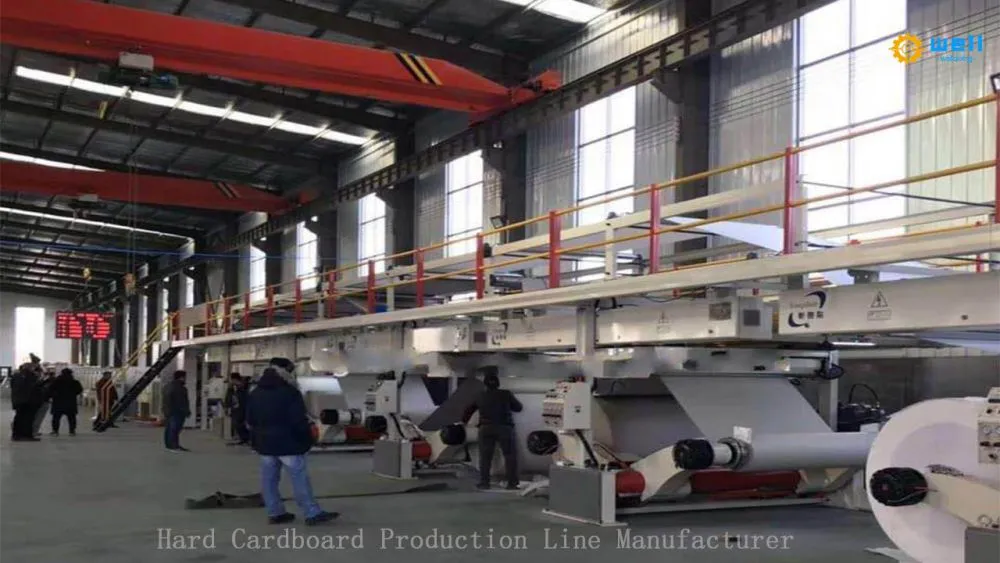
Fiber refining and pulping is the key to determining hardboard performance. Cleaned wood chips are sent to a steam softening system for high-temperature humidification to soften the internal wood structure. Then, refined by professional grinding equipment, the softened wood materials are crushed into fine and uniform wood fibers. During this process, trace environmentally friendly chemicals can be added appropriately to enhance the board’s waterproof performance and structural strength. The natural lignin in wood fibers serves as a natural adhesive, which endows hardboard with excellent bonding force without excessive synthetic glue.
Fiber molding is divided into two mature processes: wet and dry molding, which are the mainstream technologies of modern production lines. The wet process mixes fibers with water to form a uniform pulp slurry, which is evenly laid into fiber mats through a molding screen, and excess water is removed by vacuum drainage. The dry process directly processes dried fibers, mixes them with a small amount of resin and wax, and forms loose fiber mats through airflow paving. The wet-process hardboard has denser surface and better flatness, while the dry process features higher production efficiency and lower water consumption.
Hot pressing is the core shaping procedure of the production line. The formed fiber mats are sent to a multi-layer hot press, which applies ultra-high pressure of thousands of tons and high temperature above 350°C. Under high temperature and high pressure, fibers are tightly compressed, lignin is fully cured, and loose fiber mats are quickly shaped into dense hardboard blanks. The segmented pressing technology adopted by modern equipment ensures high density on the board surface and reasonable toughness in the core layer, balancing hardness and flexibility. After hot pressing, the boards are cooled and stabilized to prevent deformation.
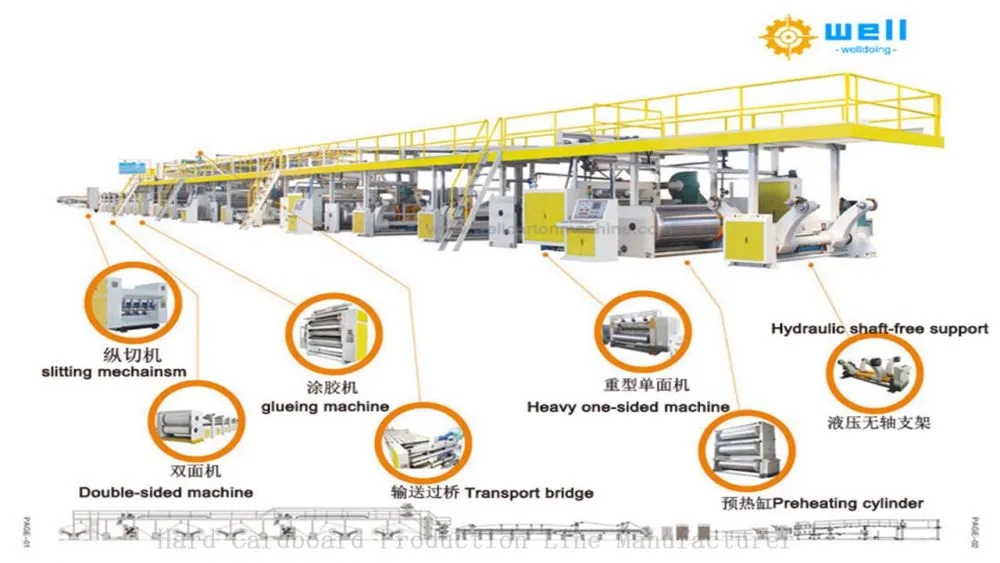
The final finishing process includes trimming, sanding, humidification treatment, and quality inspection. The production line automatically cuts boards into standard sizes, polishes the surface to achieve smooth texture, and conducts humidification balance treatment to improve the board’s dimensional stability and adapt to different environmental humidity. Equipped with intelligent detection systems, the line automatically screens unqualified products to ensure all finished boards meet industry standards.
Modern automated hardboard production lines have obvious advantages over traditional manual and semi-automatic equipment. First, the whole-process intelligent control realizes precise parameter adjustment, ensuring consistent board thickness, density, and strength of each batch. Second, it makes full use of recycled wood resources, with high raw material utilization rate and low production waste, meeting green production standards. In addition, the integrated design greatly improves production efficiency, reduces labor costs, and adapts to large-scale industrial production.
In conclusion, the hardboard production line is a systematic and intelligent industrial system. Through standardized process links and advanced equipment technology, it transforms ordinary wood residues into high-value environmental protection building materials. With the continuous upgrading of green manufacturing technology, modern hardboard production lines are developing towards higher efficiency, lower energy consumption, and more intelligent operation, providing stable and high-quality material support for the global furniture and construction industries.
Email:cartonmachine.tomwang@aliyun.com
Phone/Wechat/Whatsapp:+86 133 0307 8975
Recently Posted
-
Boost Packaging Efficiency: All-in-One Paper Corner Protector Production Line
July 29, 2026In modern logistics, packaging, and manufacturing industries, product edge protection is indispensable to reduce transit damage an Read More
 -
Ink Waste Water Treatment Machine: Efficient, Energy-Saving & Eco-Friendly Solution for Printing Ind
July 28, 2026Printing, packaging, and flexo/gravure printing enterprises constantly face tricky environmental challenges, among which ink waste Read More
 -
Carton Partition Assembly Machine: Boost Packaging Efficiency & Stability
July 25, 2026In the fast-paced packaging and logistics industry, carton internal partitions are essential for protecting fragile, scattered, an Read More
 -
Paper Edge Protector Machine: Upgrade Your Packaging Efficiency & Sustainability
July 24, 2026In modern packaging, logistics, and manufacturing industries, product edge damage has long been a common and costly pain point. Sc Read More

Contact Us
Recommended Products
-
 Semi Automatic Corrguated Carton Stitching MachineUS$ 10000 - 50000MOQ: 1 Set
 -
Semi Automatic Stitching Machine ManufacturerUS$ 15000 - 35000MOQ: 1 Set
-
Semi Automatic Stitching Machine Factory SupplierUS$ 15000 - 35000MOQ: 1 Set
-
Semi Automatic Stitch Machine - Stitcher EquipmentUS$ 20000 - 30000MOQ: 1 Set
-
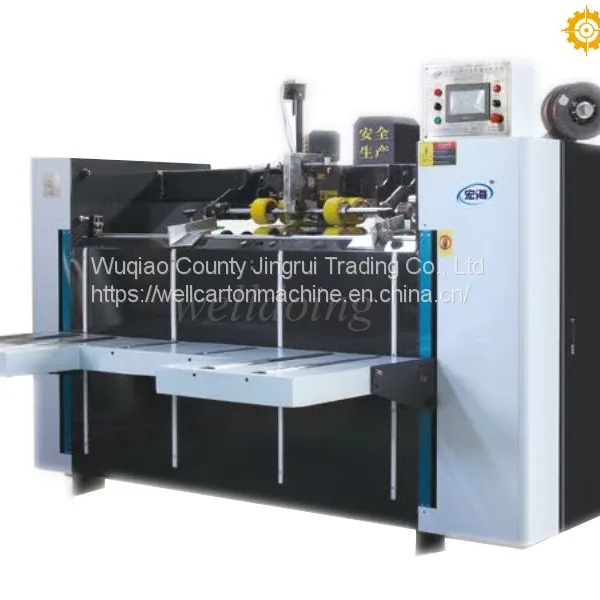
Semi Automatic Stitch Nailing Box EquipmentUS$ 15000 - 35000MOQ: 1 Set
-
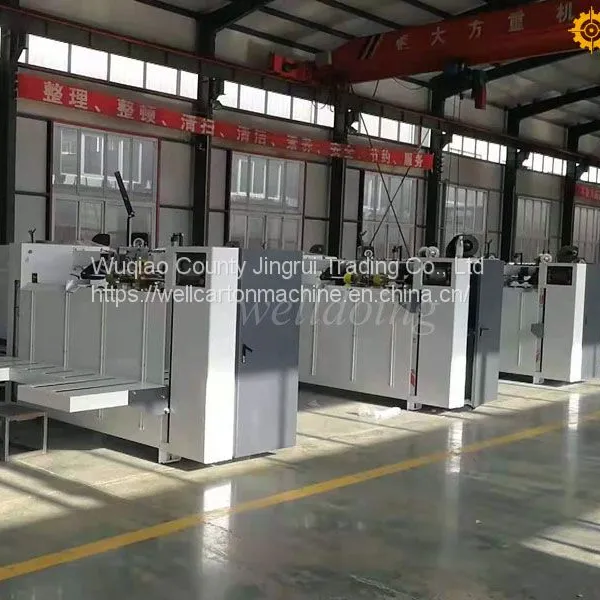
Semi Automatic Stitch Box MachineryUS$ 15000 - 35000MOQ: 1 Set
-
Semi-automatic Nailing Stitcher MachineUS$ 20000 - 30000MOQ: 1 Set
-
Semi Auto Corrugated Box Stitching Machine SupplierUS$ 20000 - 30000MOQ: 1 Set
-
Semi-automatic Box Stitch Packing MachineUS$ 20000 - 30000MOQ: 1 Set
-
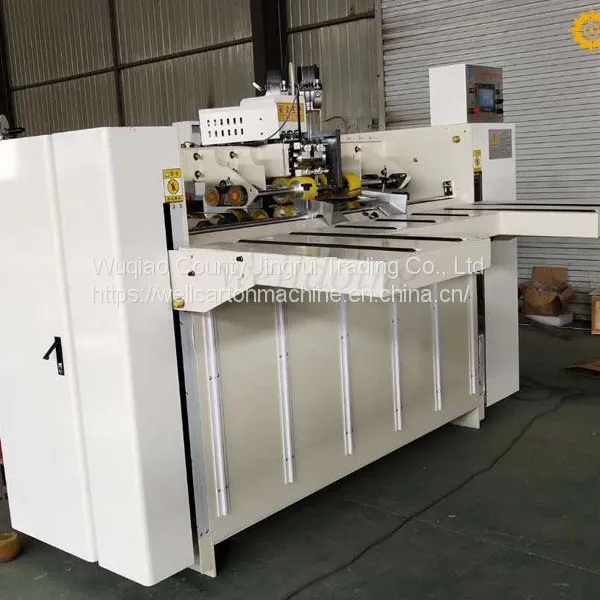
Semi Auto Stitching Carton Box EquipmentUS$ 20000 - 30000MOQ: 1 Set
-
Semi Automatic Stitching Machine SupplierUS$ 15000 - 35000MOQ: 1 Set
-
Semi-automatic Corrugated Box Nailing Stitcher Packaging MachineUS$ 20000 - 30000MOQ: 1 Set
-
Semi Automatic Packaging Box Stitch EquipmentUS$ 15000 - 35000MOQ: 1 Set
-
Semi Automatic Packaging Box Stitcher & Stitching MachineUS$ 15000 - 35000MOQ: 1 Set
-
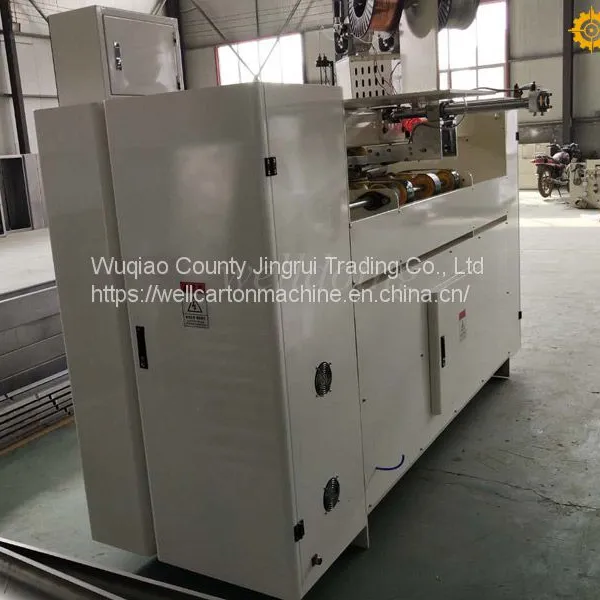
Semi Automatic Stitching MachineUS$ 15000 - 35000MOQ: 1 Set
-
Full Automatic Box Stitching MachineUS$ 25000 - 40000MOQ: 1 Set
-
Semi-automatic Corrugated Box Nail Stitcher MachineUS$ 20000 - 30000MOQ: 1 Set
-
Semi Automatic Packaging Box Stitching MachineUS$ 15000 - 35000MOQ: 1 Set
-
Semi-automatic Carton Box Nailing Stitcher Packaging MachineUS$ 20000 - 30000MOQ: 1 Set
-
Semi Automatic Packaging Box Nailing MachineUS$ 15000 - 35000MOQ: 1 Set